The sacred corridor; defined by North Dakota author Clay Jenkinson as the vast, high, treeless, improbable plain from southern Saskatchewan to western Nebraska, bounded to the east by roughly the 100th parallel and to the west by the first towering heights of the Rockies. US Highway 85 passes through the heart of the Sacred Corridor, but you must leave it to feel it. Its essentially the old Buffalo Country, a land of deep cultural and spiritual significance to Indigenous peoples of the northern and central plains---the Lakota, Blackfeet, Cheyenne, Assiniboine, and Crow---peoples who's cultures are dominated by the sky, buffalo herds, and the land. Its crossed by shallow rivers and creeks at the bottom of draws lined with thickets of Chokecherry, American Plum, and an occasional Cottonwood or Ash grove. The gently rolling shortgrass plain is temporality and abruptly disturbed with isolated buttes and pine ridges. Elsewhere, rugged clay Badlands cut through the land like an open wound. The wind is brutal here. The summers are hot and often dry. The winters are long, dark, and dangerously cold. In this land, nothing comes easy. Despite this, or perhaps because of it, to me this land embodies the spirit of place.
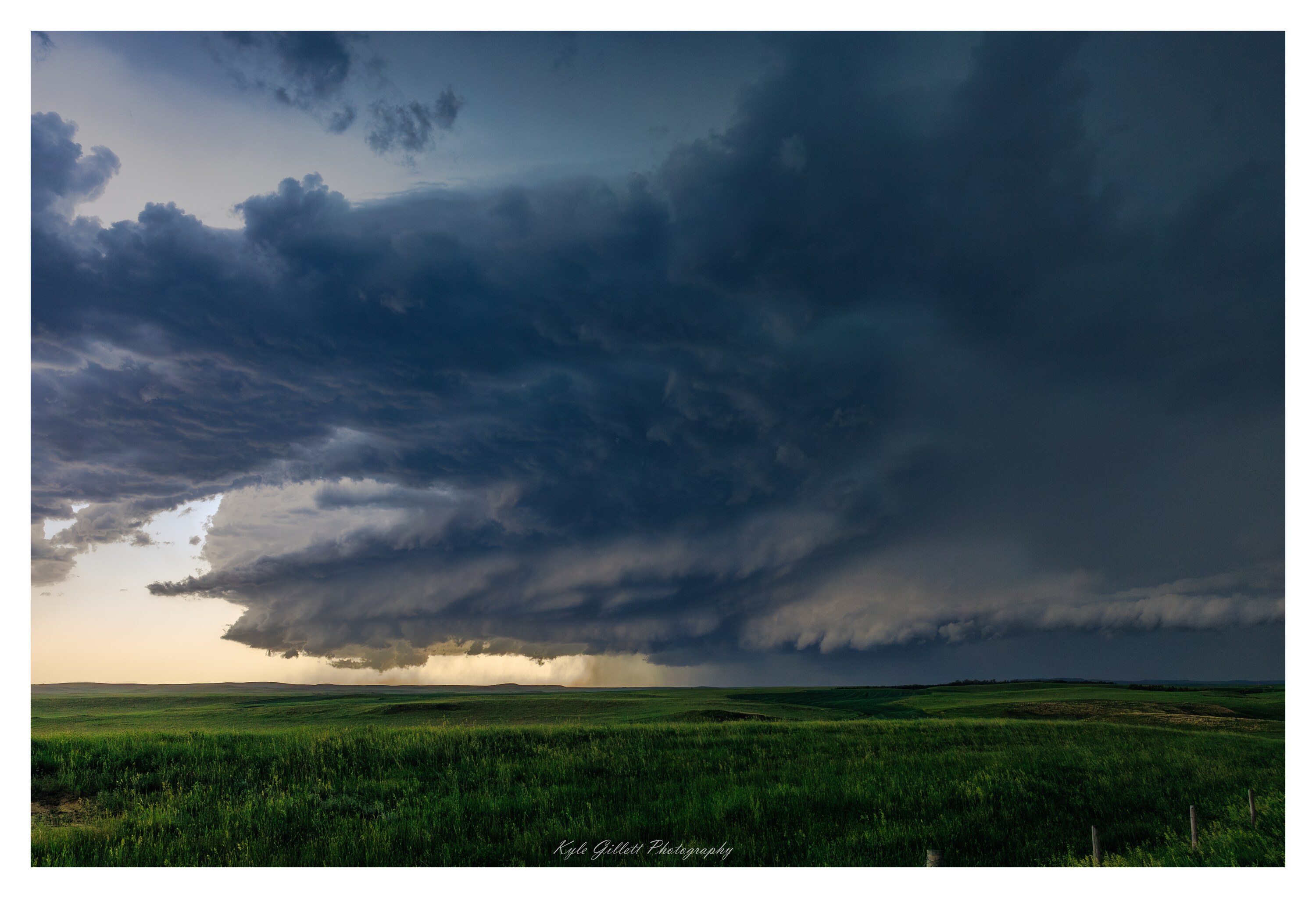
The Sacred Corridor is my favorite region to storm chase. To the people who once freely called this region home, the sky was central to their way of life. Jenkinson accurately describes it's sky as simultaneously "sublime and terrifying". To me, witnessing the immense beauty and power of the Northern Plains sky atop this vast and open plain, entirely exposed to its will, is unlike any feeling I've experienced. The feeling may be best described like this: vulnerable yet amazed, nearly subservient yet fully at peace. To chase here means to travel along paths of a both fascinating and tragic episode of human history, to see a land as unmolested by modern humans as one may find in twenty first century America, and to feel true spirit.
I've chased in various corners of the Scared Corridor; eastern Wyoming, southeastern Montana, southwestern North Dakota, northwestern and north central South Dakota. Each time it's pure magic. In late May 2020 I chased southeastern Wyoming, and despite a rather indifferent convective performance, the landscape made up for it.
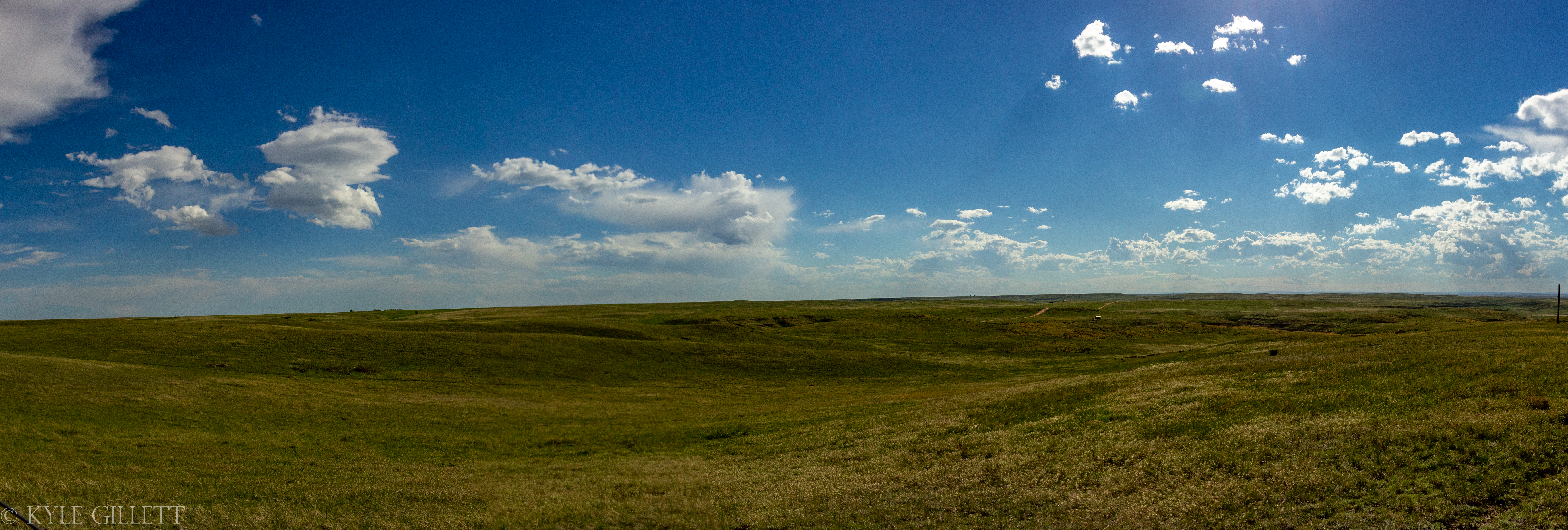
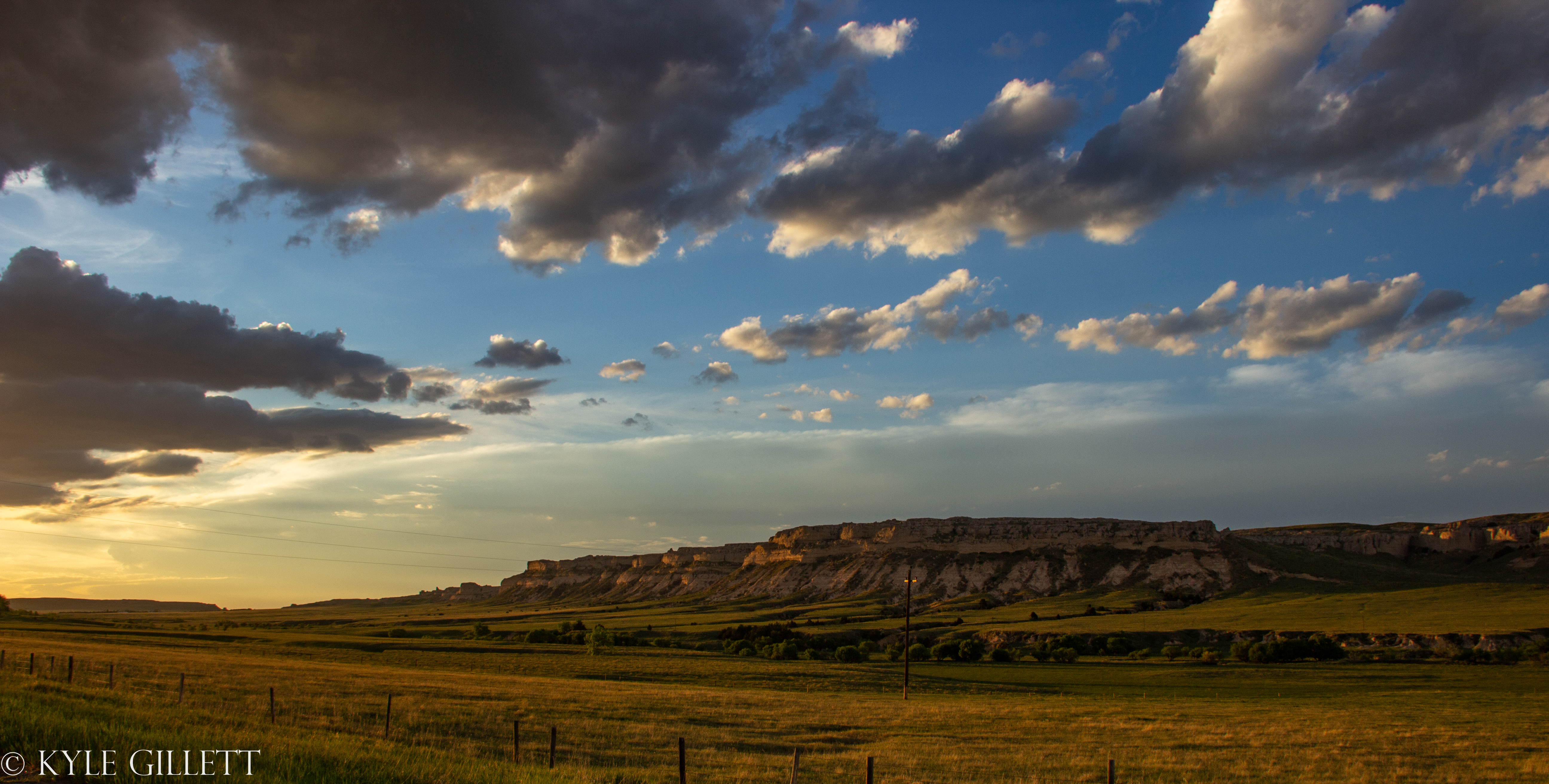
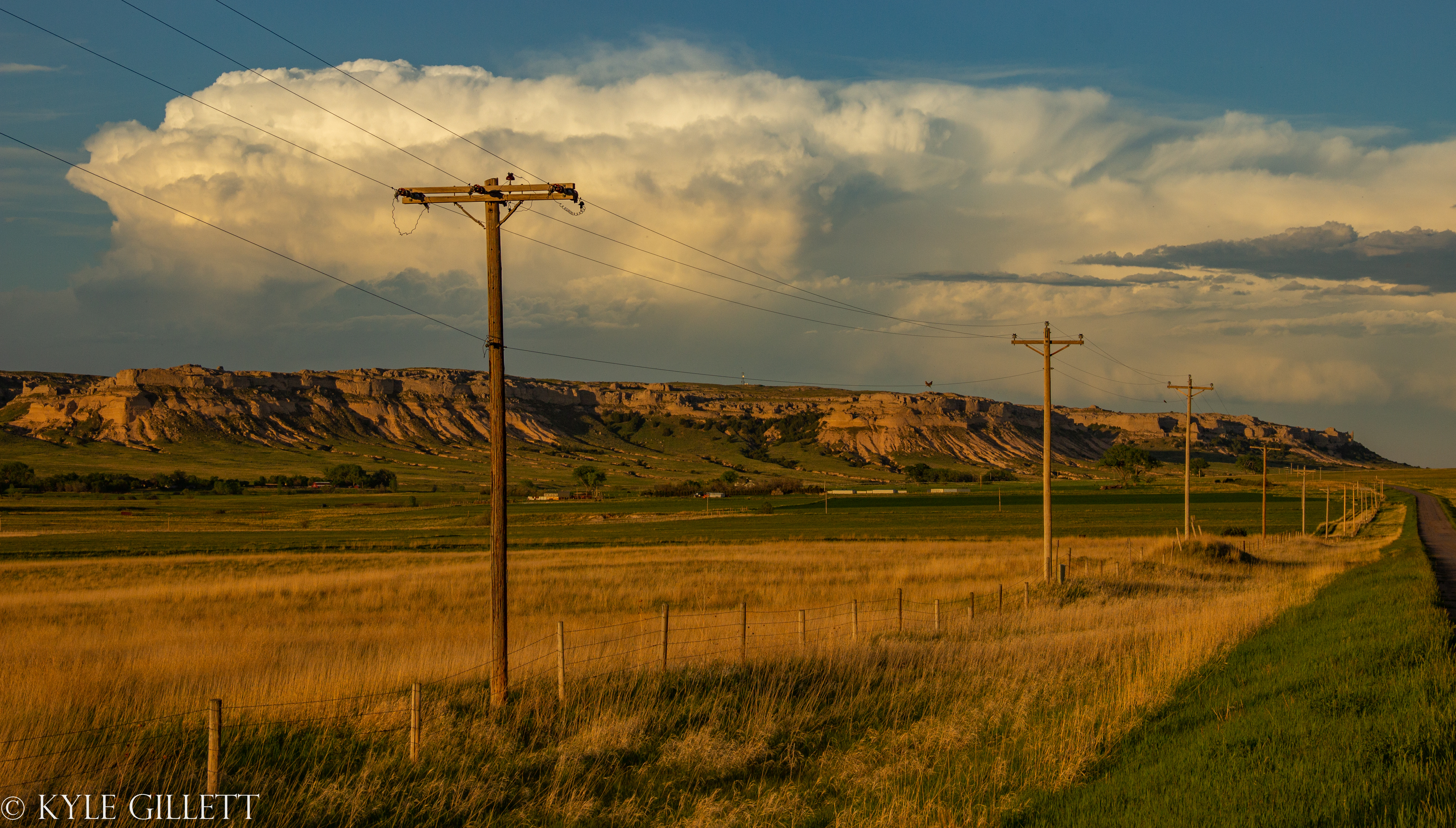
Such a landscape is Bear Creek Mountain. Although hardly a "true" mountain, the table top mesa is an erosional remanent of the Goshen Rim that abruptly rises some 500 ft above the surrounding plain. Just 20 miles northeast of Bear Creek mountain, Horse Creek meets the North Platte River along the Nebraska border. At this site in 1851, over 10,000 indigenous people met a delegation of white government officials---the largest gathering of natives ever on the plains---to negotiate and sign a treaty that desired safe passage of white settlers in exchange for annuity payments and government protection of native hunting grounds. I'm sure you can imagine how this played out---broken promises. After the Treaty of Fort Laramie of 1851 was signed, the white delegation changed the terms of the annuity payments (without consent of tribal representation), eventually didn't finish paying them anyway, and failed to protect hunting grounds. By the 1860s the country was in open warfare.
- Goodhouse, D. W., 2023: Hinápxiŋ Ohúŋkaŋkaŋ: Ancient stories of emergence. Tribal College Journal, 35 (1), Fall 2023. Accessed 16 September 2026.