
University of North Dakota Software Developer SounderPy; Weather Front
Welcome!
I'm an Atmospheric Science PhD student at the John D. Odegard School of Aerospace Science at the University of North Dakota. I also chase and document extreme weather and maintain Python software.
My Master’s thesis research at the University of North Dakota involves high-resolution numerical experiments of storm interactions that result in tornadogenesis. You'll find those details below.
My interests in meteorology primarily include severe convective storm dynamics (particularly storm interactions, tornadogenesis, & supercell behavior). I also have interests in developing data visualization tools for meteorology and weather’s impact on Great Lakes maritime disasters.
Curriculum Vitae
* denotes student co-author, ** denotes invited presentation
Publications
- Gillett, K. J., 2025: SounderPy: An atmospheric sounding visualization and analysis tool for Python. J. Open Source Software, 10, 8087, https://doi.org/10.21105/joss.08087.
Oral Presentations
- Gillett, K. J., 2026: SounderPy: A Sounding Analysis and Visualization Platform for Severe Weather Forecasting. Presented at the Environment Canada Storm Prediction Centre Winnipeg Spring Change of Seasons Workshop, Dartmouth, Nova Scotia, Canada.
- Gillett, K. J., 2026: Storm Interactions: Their Relationship with Storm Behavior and Tornadogenesis. Presented at the Environment Canada Storm Prediction Centre Winnipeg Spring Change of Seasons Workshop, Dartmouth, Nova Scotia, Canada.
- Gillett, K. J., 2026: SounderPy: A Sounding Analysis and Visualization Platform for Severe Weather Forecasting. Presented at the Environment Canada Storm Prediction Centre Winnipeg Spring Change of Seasons Workshop, Winnipeg, Manitoba, Canada.
- Gillett, K. J., 2026: Storm Interactions: Their Relationship with Storm Behavior and Tornadogenesis. Presented at the Environment Canada Storm Prediction Centre Winnipeg Spring Change of Seasons Workshop, Winnipeg, Manitoba, Canada.
- Gillett, K. J., 2026: A Theory on the Relationship between Rear-Flank Storm Interactions, Storm Behavior, and Tornadogenesis. Presented at the Symposium on Local Atmospheric Research, University of North Dakota, Grand Forks, North Dakota.
- Gillett, K. J., 2026: Storm Interactions: Their Relationship with Storm Behavior and Tornadogenesis. Presented at the Grand Forks National Weather Service Change of Seasons Workshop, Grand Forks, North Dakota.
- Gillett, K. J., 2026: A Theory on the Relationship between Rear-Flank Storm Interactions, Storm Behavior, and Tornadogenesis. Presented at the 29th Annual Central Iowa National Weather Association Severe Storms and Doppler Radar Conference, Ames, Iowa.
- Nixon, C., K. Gillett, J. Tang, and H. Fowkes, 2025: Chase Archive: Introducing the biggest collection of storm chases on the web. For chasers, by chasers. Presented at the National Storm Chaser Summit.
- Gillett, K. J., 2025: A Simple Guide to Forecasting the Northern Lights: Auroral Substorms. Presented at the Seminar for Local Atmospheric Research, Grand Forks, North Dakota.
Posters
- Gillett, K. J., 2026: A Numerical Investigation into the Impacts of a Rear-Flank Storm Interaction on Storm Behavior and Tornadogenesis. Poster presented at the Graduate Research Achievement Day, University of North Dakota, Grand Forks, North Dakota.
- Belzer, B. W., K. J. Gillett, and J. D. Carstens, 2026: Convective Environments Preceding Landfall in Tornadic Tropical Cyclones: An Analysis of Airborne Observations. Poster presented at the 106th AMS Annual Meeting, Houston, Texas, https://doi.org/10.13140/RG.2.2.29219.11047.
- Gillett, K. J., 2024: SounderPy: A Sounding Visualization Tool for Severe-Weather Analysis and Forecasting. Poster presented at the 27th Annual Central Iowa National Weather Association Severe Storms and Doppler Radar Conference, Ankeny, Iowa, https://doi.org/10.13140/RG.2.2.15823.29600.
Featured In
- Synoptic Analysis and Forecasting: An Introductory Toolkit, 2nd Edition, Shawn Milrad, 2025.
Research
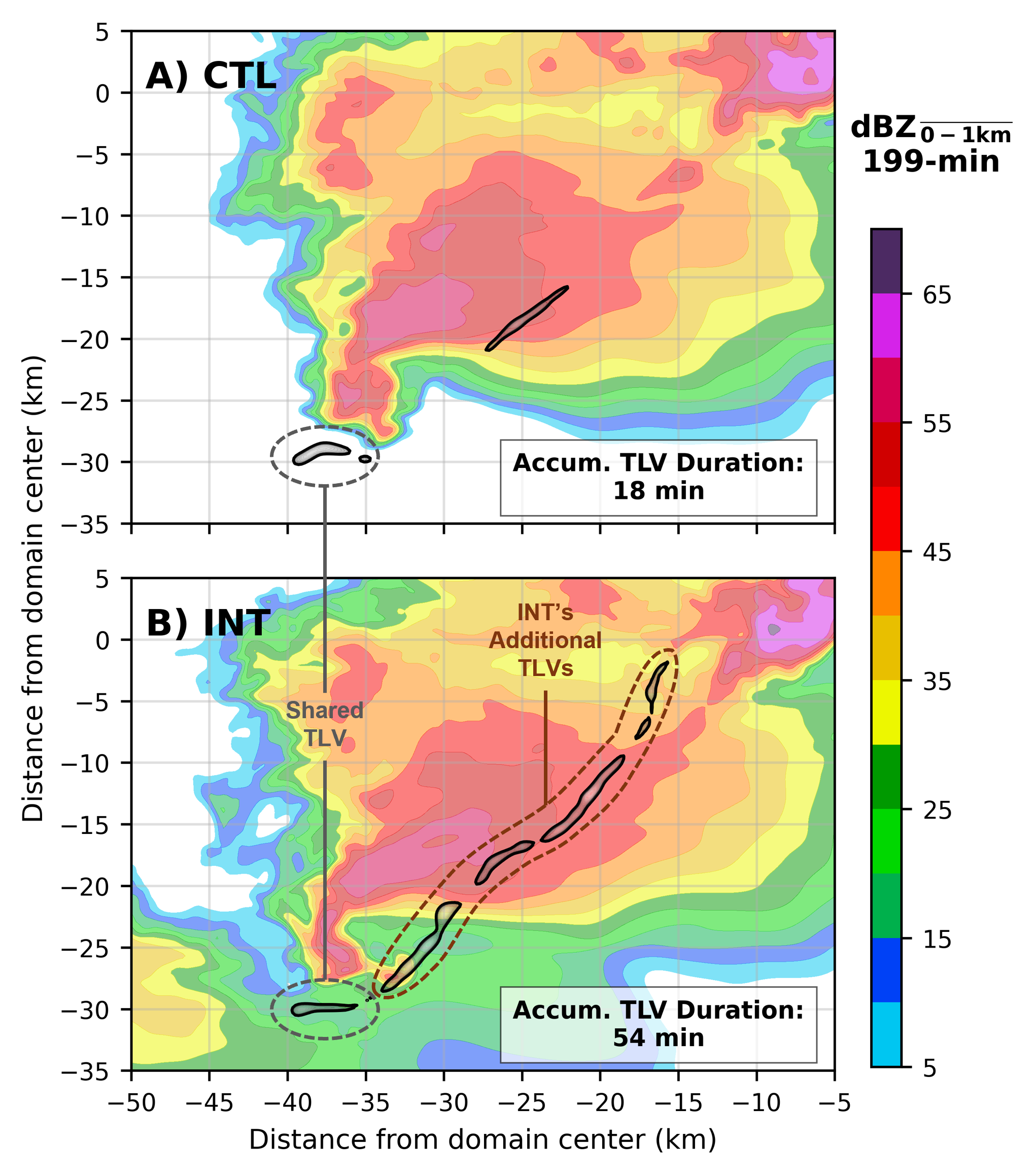
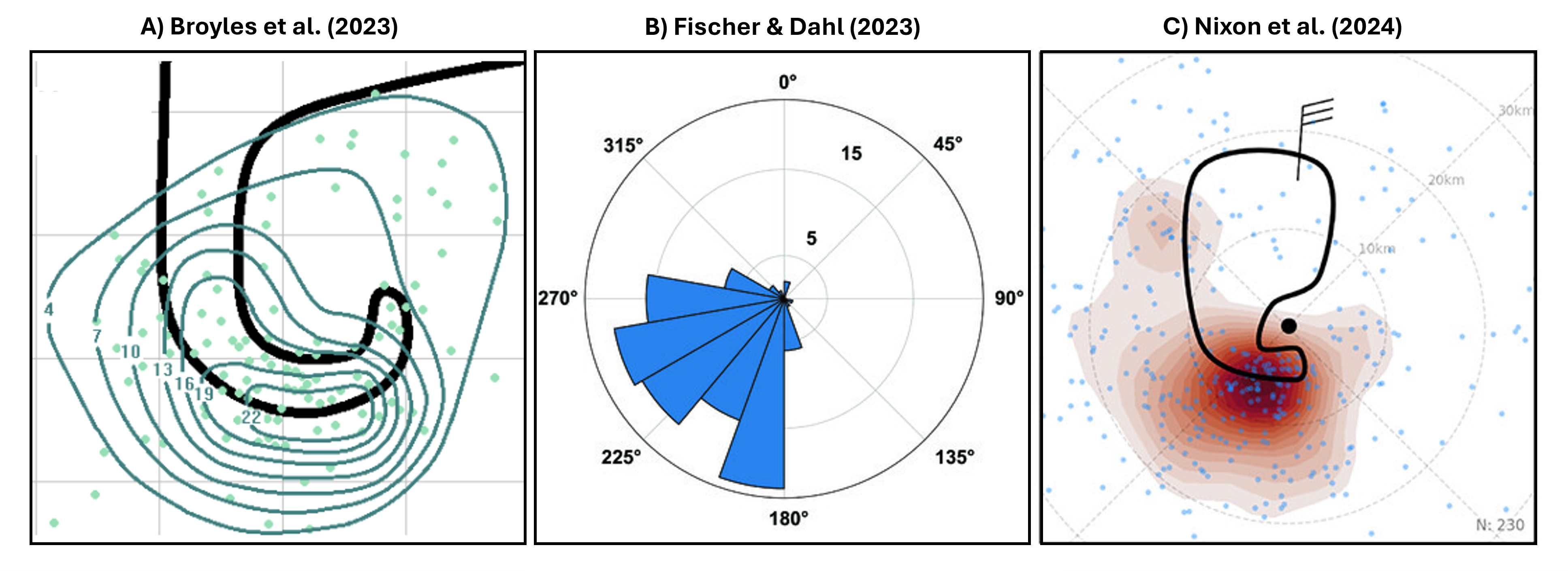
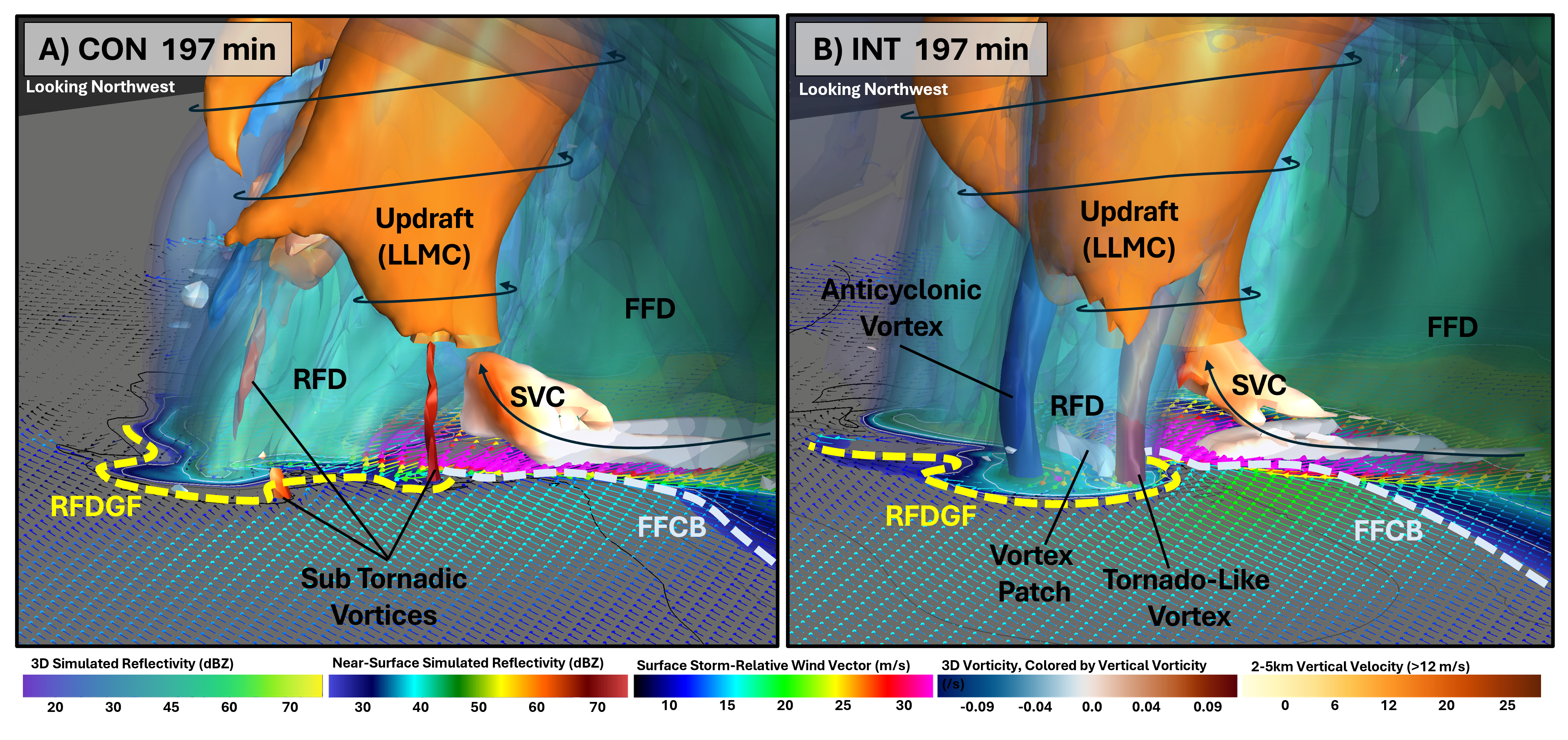
Storm interactions are known to induce changes in parent supercell storm behavior, including the production of tornadoes (e.g., Lemon 1976; Lee et al. 2006; Hastings and Richardson 2014; Fischer and Dahl 2023; Nixon et al. 2024; Werkema et al. 2025). Why this is true remains a question often asked but generally unanswered. To address this, idealized numerical simulations are used to investigate the full three-dimensional evolution of rear-flank storm interactions (which are often associated with increased tornado production, e.g., Nixon et al. 2024). Changes in storm behavior and tornado-like vortex production are tracked and physical mechanisms governing interaction outcome are investigated.
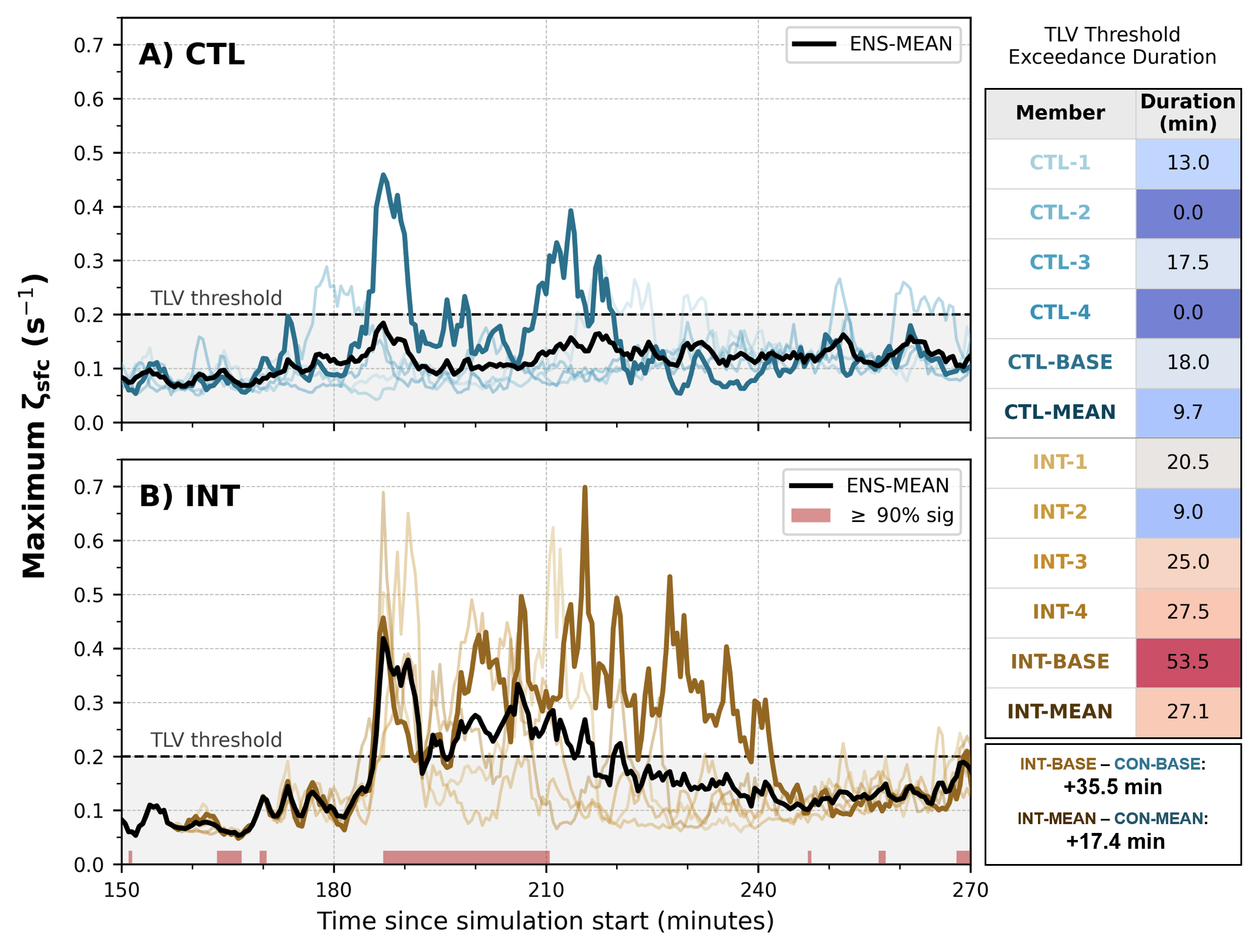
Simulated parent supercells subjected to rear-flank storm interactions exhibited dramatic increases in tornado-like-vortex (TLV) production. In one simulation, the parent supercell's accumulated TLV duration was 35 minutes longer than the control simulation. Rear-flank downdraft (RFD) behavior also changed markedly, becoming stronger and facilitating a state of inflow-outflow balance beneath the parent's low-level updraft. These changes in RFD behavior, perhaps the most important influence of the storm interaction, appear to be driven in part by both buoyancy and dynamic mechanisms.
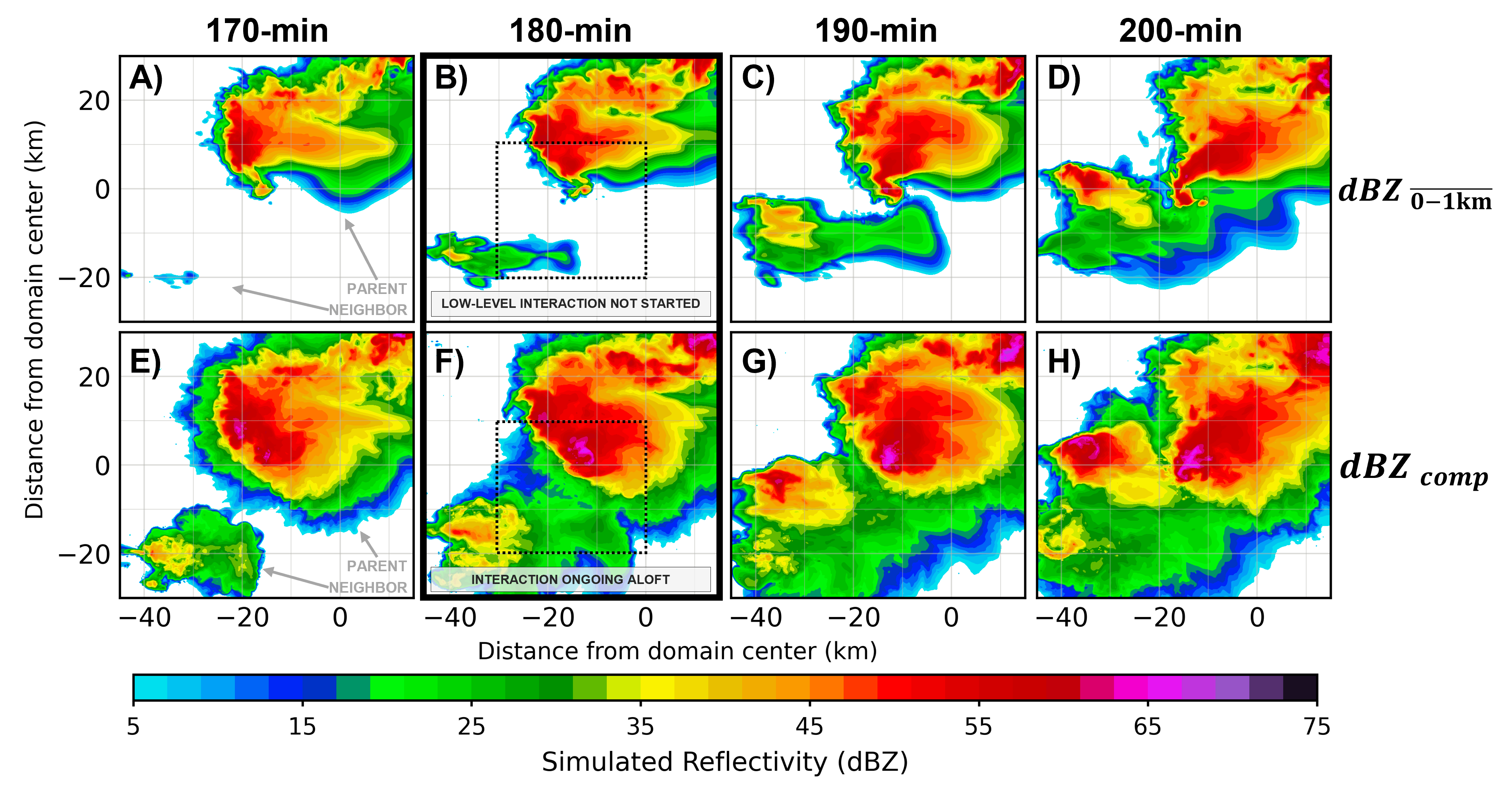
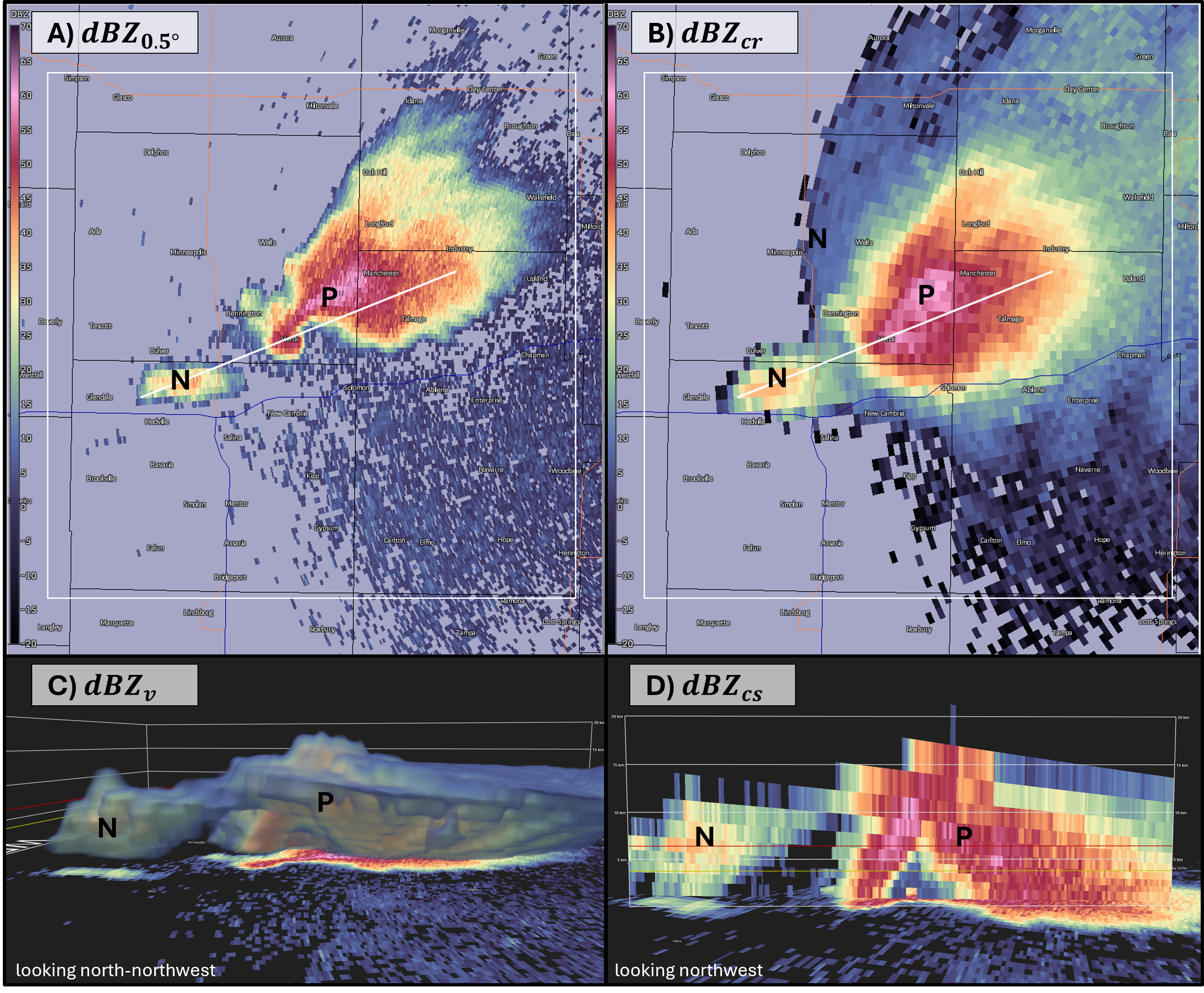
Among the most interesting aspects of the simulated storm interactions was the fact that storm behavior appeared to change before the interaction appeared to "begin" on low-altitude simulated reflectivity. Investigating this further revealed the obvious: the storm interaction was also taking place aloft and doing so before it appeared at lower altitudes (also observed by Byers and Braham 1949, Wescott and Kennedy 1989, and Lee et al. 2006).
The simulated storm interactions start aloft as much as 15–20 minutes before appearing in low-altitude reflectivity. Composite reflectivity may serve as a tool to help identify interactions occurring aloft and perhaps increase the lead time for anticipating interaction outcomes. The interaction starting aloft also played a major role in perturbing parent storm behavior through hydrometeor seeding and several dynamic mechanisms.
Master's Thesis | University of North Dakota
Effects of a Rear-Flank Storm Interaction on Supercell Behavior and Tornado-like Vortex Development in Idealized Simulations - A Master's Thesis presented to the University of North Dakota Department of Atmospheric Science; July 2026
Thesis Abstract
Observationally, storm interactions have been associated with changes in severe convective storm behavior and evolution, including the development and maintenance of tornadoes. In particular, the interaction of neighboring convection in or near the rear flank of a supercell thunderstorm has frequently been associated with tornadogenesis. Although statistical relationships for these changes in behavior have been established, the underlying physical mechanisms governing their evolution remain poorly understood, owing in part to limited spatial and temporal resolution of most observational datasets. Previous modeling efforts also lack the design and resolution required to sufficiently examine this problem. This study aims to complement and build upon existing findings by investigating the impact of auxiliary convection near the rear flank of a weakly tornadic supercell thunderstorm. Presented are two sets of numerical experiments, each consisting of five idealized model simulations. One experiment set simulates a single discrete "parent" supercell thunderstorm, while the other simulates the same "parent" subjected to a rear-flank interaction with an auxiliary "neighbor" cell. The interaction simulations reveal drastic changes in overall storm behavior and production of tornado-like vortices. The results suggest both buoyant and dynamic contributions to these changes and provide further evidence that rear-flank storm interactions can modulate overall storm behavior, which in turn modulates tornado development and maintenance.
- Gillett, K. J., 2026: Effects of a Rear-Flank Storm Interaction on Supercell Behavior and Tornado-like Vortex Development in Idealized Simulations. M.S. thesis, Dept. of Atmospheric Science, University of North Dakota, available at https://commons.und.edu/theses/13873/.
UND GRAD Poster Presentation
A poster featuring preliminary findings presented to the University of North Dakota Graduate Student Research Achievement Day, March 2026, Grand Forks, North Dakota (click to enlarge)
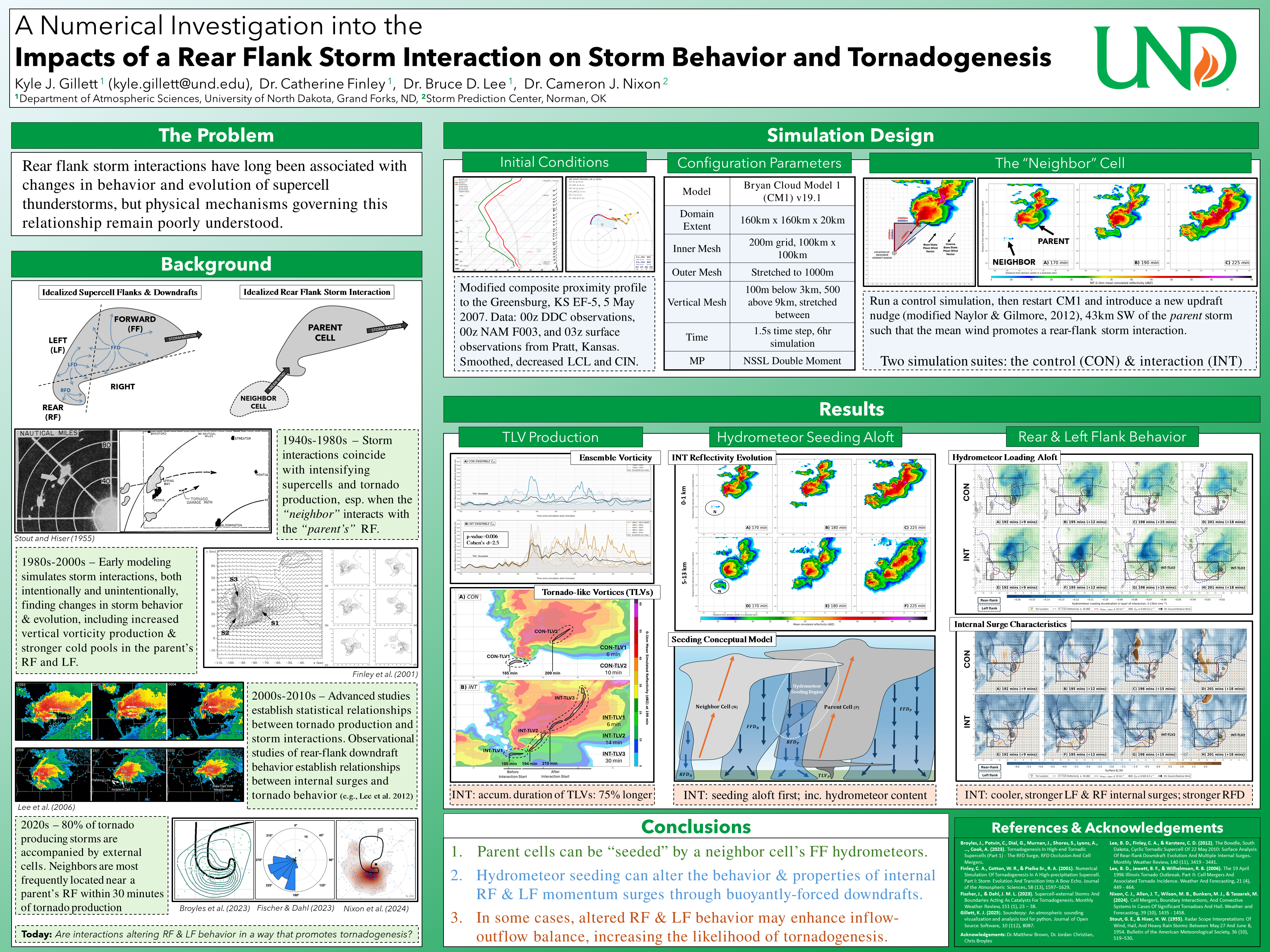
- Gillett, K. J., 2026: A Numerical Investigation into the Impacts of a Rear-Flank Storm Interaction on Storm Behavior and Tornadogenesis. Poster presented at the Graduate Research Achievement Day, University of North Dakota, Grand Forks, North Dakota.
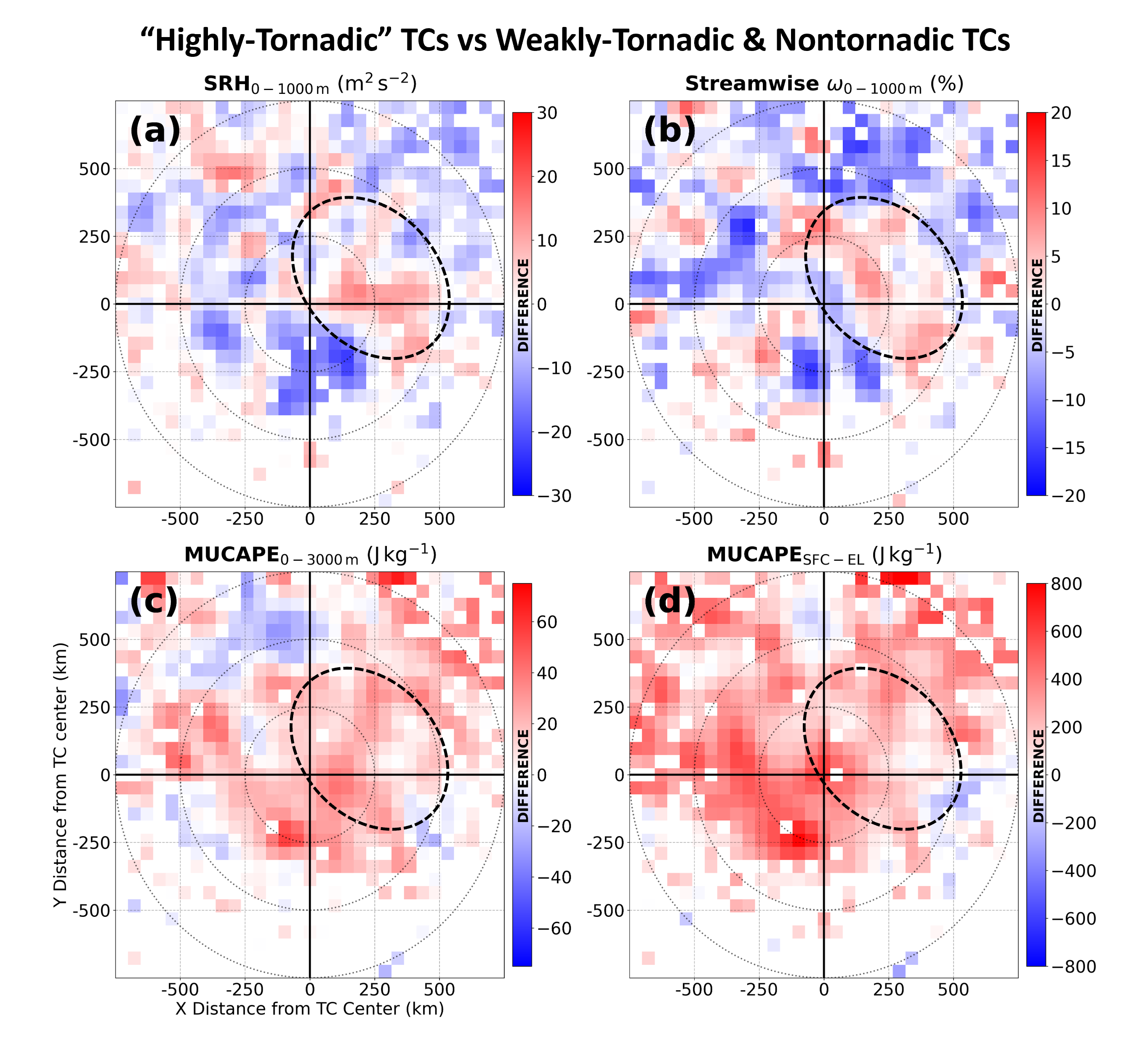
Convective Environments Preceding Landfall in Tornadic Tropical Cyclones: An Analysis of Airborne Observations. Presented at the 106th AMS Annual Meeting in Houston, Texas
Synopsis: An analysis of ~30,000 dropsondes deployed from recon aircraft between 1995-2021 (Nguyen et al. 2019) are sorted by storm and then into two categories: weakly/non-tornadic Tropical Cyclones (TCs) and highly tornadic TCs using the Tropical Cyclone Tornado database (TCTOR, Edwards, 2010). Weakly/non-tornadic (highly-tornadic) TCs are defined as TCs producing <15 (>=15) tornadoes. Individual dropsonde points for both subsets were then spatially organized into 50 x 50 km bins relative to TC-center. After quality controlling the data (removing points beyond standard deviation criteria, interpolating over missing data, etc.), mean vertical profiles were constructed for each bin, revealing a 50 x 50 km area-averaged vertical profile in each bin for both subsets. A few relevant convective storm environment parameters and vertical profiles were compared to evaluate the differences between the two subsets. Preliminary takeaways from this work suggest that highly tornadic TCs exhibit "more favorable" thermodynamic and kinematic environmental configurations in their right-front storm-relative quadrant than weakly/non-tornadic TCs. (click to enlarge)
AMS conference poster
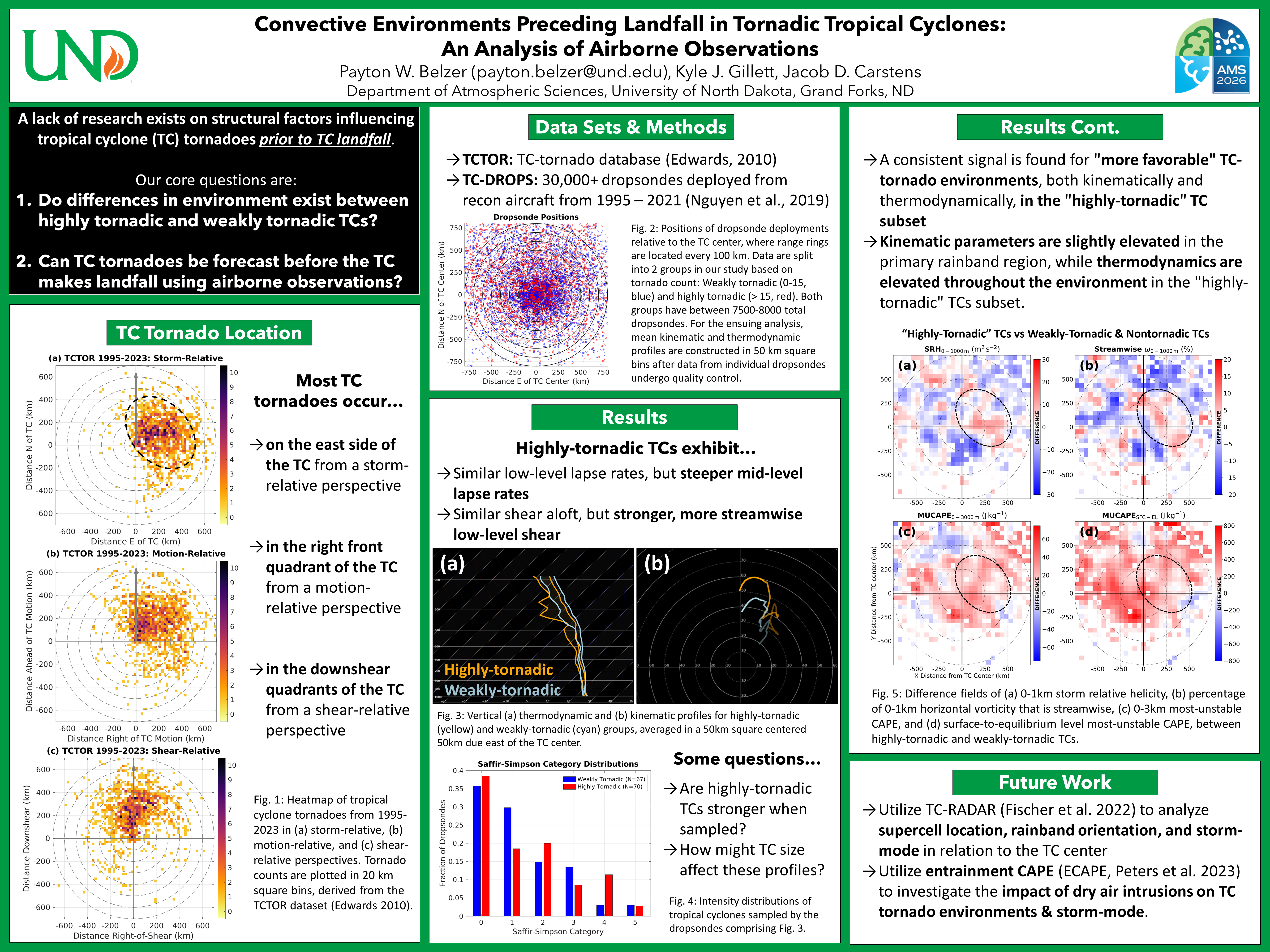
- Belzer, B. W.*, K. J. Gillett, and J. D. Carstens, 2026: Convective Environments Preceding Landfall in Tornadic Tropical Cyclones: An Analysis of Airborne Observations. Poster presented at the 106th AMS Annual Meeting, Houston, Texas, https://doi.org/10.13140/RG.2.2.29219.11047.
* denotes student coauthor
Tools
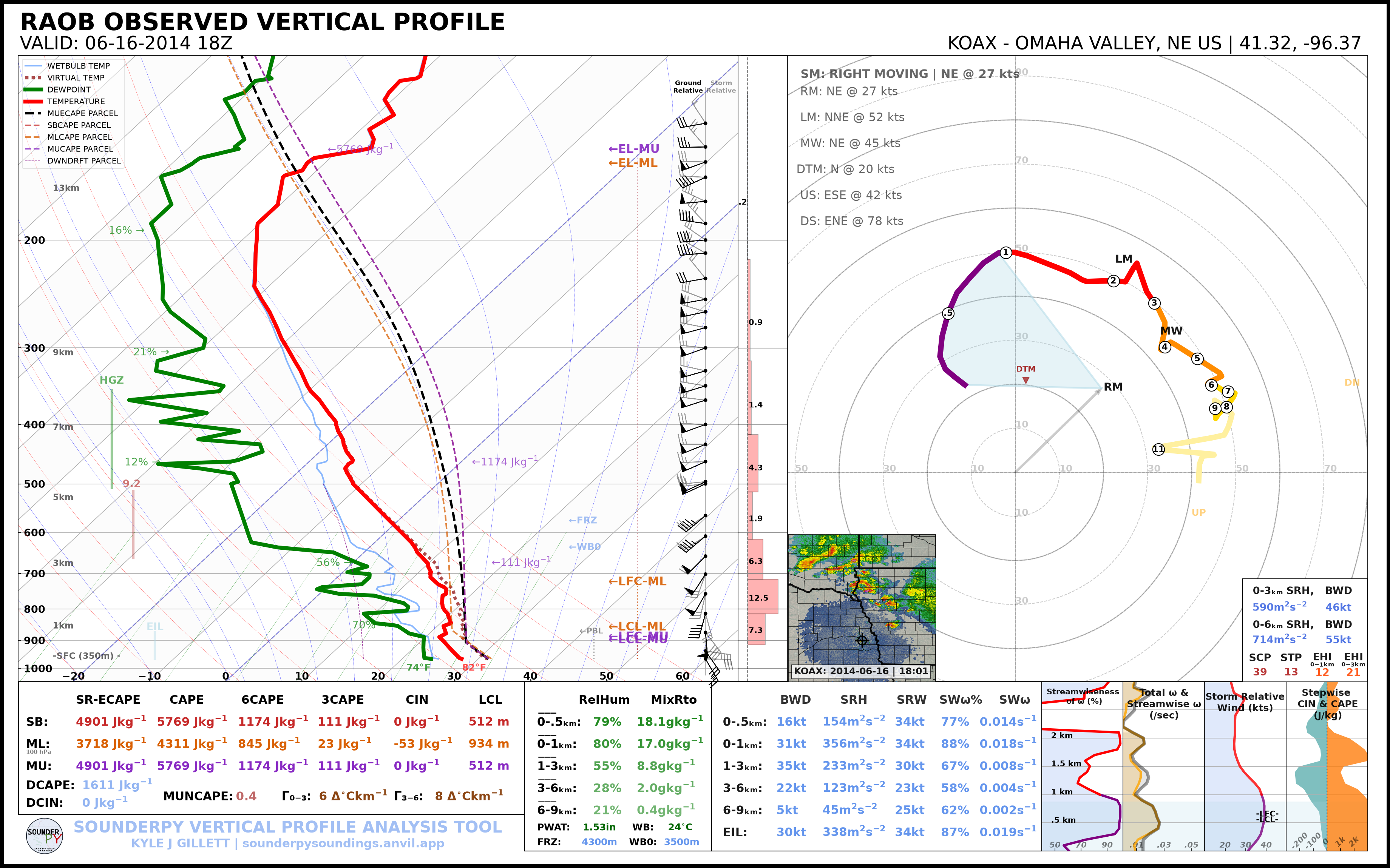
An open-source Python toolkit for retrieving, analyzing, and visualizing atmospheric sounding data.
SounderPy streamlines and unifies the path from raw sounding data to clear and advanced Skew-T and hodograph plots. The code is simple, quick, and designed for users of all experience levels.
At a glance
- Data: RAOB and IGRAv2 observations; ACARS aircraft observations; ERA-5, RAP, RUC, & NCEP-FNL model reanalysis; HRRR, RAP, NAM, NAMNEST, GFS, SREF, and HIRESW forecast models; CM1 base-state profiles; WRF output; SHARPpy.
- Workflow: retrieve sounding data, compute hundreds of sounding parameters, and plot data on advanced figures with only a few lines of Python or terminal commands.
- Output: advanced sounding and hodograph visualizations.
Article PDF & citation
An article published in The Journal of Open Source Software in August 2025:
- Gillett, K. J., 2025: SounderPy: An atmospheric sounding visualization and analysis tool for Python. J. Open Source Software, 10, 8087, https://doi.org/10.21105/joss.08087.
Full project abstract
SounderPy is a simple, open-source Python package for retrieving and plotting vertical profile (sounding) data. Built for simplicity and reliability for all uses and users, this project’s goal is to provide a uniform method for sounding analysis across multiple data types. Severe weather analysis and forecasting requires a sound comprehension of thermodynamic and kinematic properties of the environment. SounderPy makes this possible with robust access to data and custom visualizations. The tool creates complex yet effective sounding and hodograph plots with high readability which are designed specifically for severe weather analysis and forecasting. SounderPy is capable of retrieving and plotting model forecast data, observed radiosonde data, Aircraft Communications Addressing and Reporting System (ACARS) observation data, and model reanalysis data. All of this functionality can be completed in three simple lines of code or less, making SounderPy an accessible tool for both Python experts and novices. A number of scientific Python libraries build the base of SounderPy’s efficient and durable functionality, such as NumPy, Matplotlib, xarray, MetPy, and SHARPpy. SounderPy is available through GitHub and PyPI and is distributed under an MIT license.
Conference poster
A poster featuring SounderPy functionality and capabilities presented to the 27th Annual Central Iowa National Weather Association Severe Storms and Doppler Radar Conference, Ankeny Iowa, 2024 (click to enlarge)
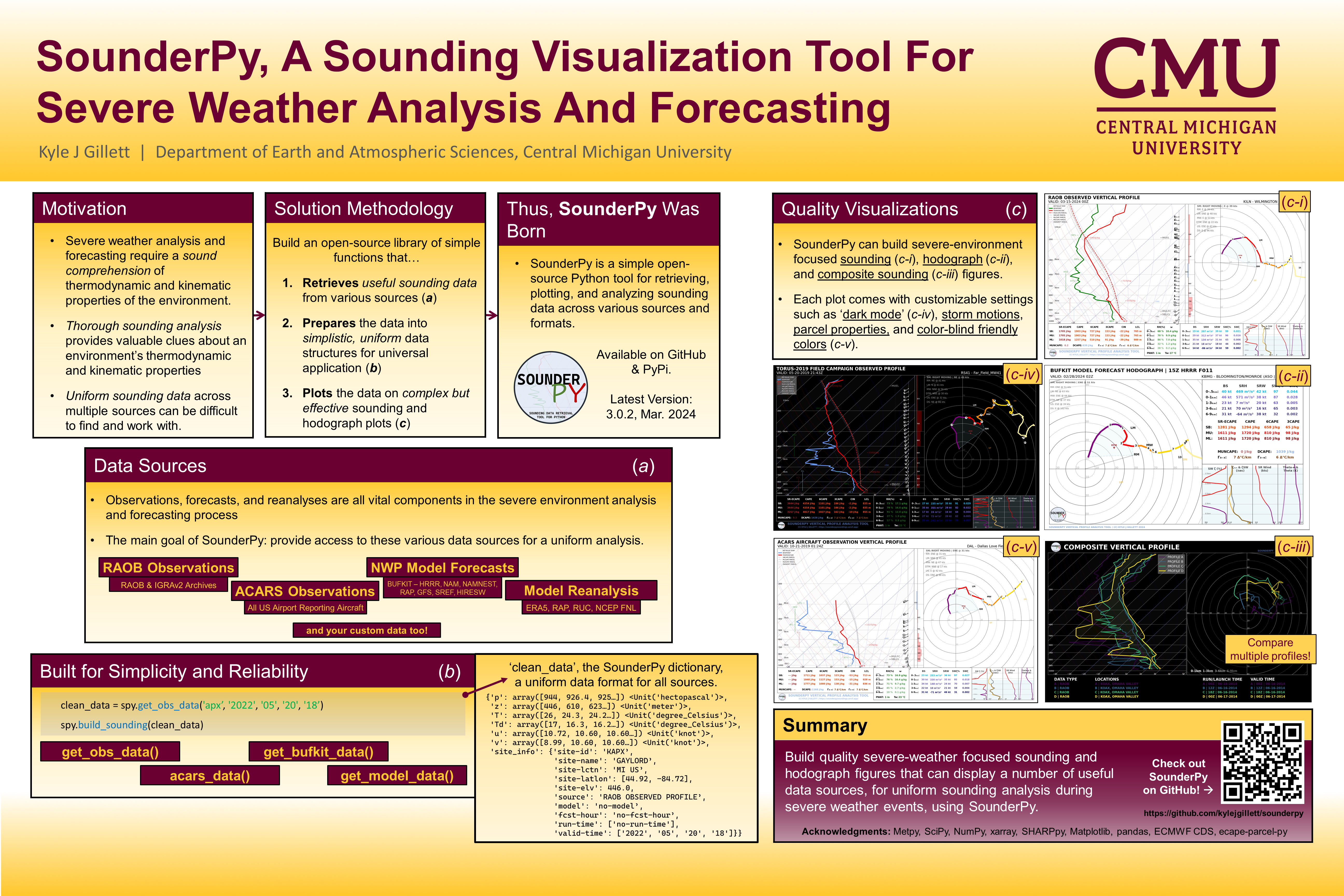
- Gillett, K. J., 2024: SounderPy: A Sounding Visualization Tool for Severe-Weather Analysis and Forecasting. Poster presented at the 27th Annual Central Iowa National Weather Association Severe Storms and Doppler Radar Conference, Ankeny, Iowa, https://doi.org/10.13140/RG.2.2.15823.29600.
Co-Founder, Co-Developer, Contributor to the Chase Archive Project: The web's largest storm data archive.
Resources
Origins of Updraft Rotation
What makes supercell storms "super"? The mesocyclone. This is how they form.
Surface Vorticity
What it is, where it comes from, and its role in tornadogenesis.
Streamwise Vorticity
Streamwise vs crosswise and what it means for supercells.
Updraft Helicity
Is it a cheat code? How you should actually use updraft helicity when forecasting.